Public administration is probably the employer with the widest range of tasks and most diverse fields of activity. From social pedagogues to legal advisors and foresters to civil engineers, everything is included. Administrative staff are anything but office stools; they work in many places in the municipality and must be able to work on the move. The day-to-day work of each individual employee is different and everyone has different needs.
1. managing and safeguarding diversity
This can be too difficult to manage, especially with IT solutions and mobile applications. The engineer wants to discuss the current construction plan with the workers during a visit to the construction site. After picking up his daughter, the legal advisor wants to answer an inquiry via smartphone and the social education worker wants to check his duty roster with a client. And because in the public sector particularly sensitive data If you work on the road, everything has to be just as secure as in the office.
2. enable and control access
With a secure connection to the existing fileshare system, employees can Current documents from the server, even on smartphones and tablets. Conversely, road surveyors, for example, can also store the road damage they have photographed with their smartphone in a folder that is synchronized on their workstation or laptop. It is important to note that not every application can access the confidential documents, but only those that the IT administrator has approved in advance. Communication with the relevant document systems must also be encrypted and work-related images must not end up on WhatsApp or Facebook.
3. make internal data securely available
The same applies to the intranet, of course. If employees do not have a convenient way to access internal information on the go, it can happen that canteen plans are sent via WhatsApp. What is still harmless when it comes to canteen meals becomes critical when it comes to duty rosters and time sheets.
By the way, you can read about what you need to bear in mind regarding WhatsApp on company cell phones in our Blog article “How to use WhatsApp in compliance with GDPR“.
4. enable work-life balance
Simply being able to read and reply to emails and view and reschedule appointments can make all the difference for many people in terms of being able to better organize their work and leisure time. This is an aspect that is also becoming increasingly important for administrative staff. The decisive factor here is that employees absolutely secure mobile access to emails and calendars and they can work with it in a familiar environment, preferably on their own device.
5. integrate specialist applications
Many employees in the public sector work with specialist applications that are tailored to their specific tasks. It is important to include these applications in mobile working, as employees can then use special programs directly where they are needed. For example, while the “tree counters” check city trees for pests and damage or the traffic wardens record parking violations in the city.
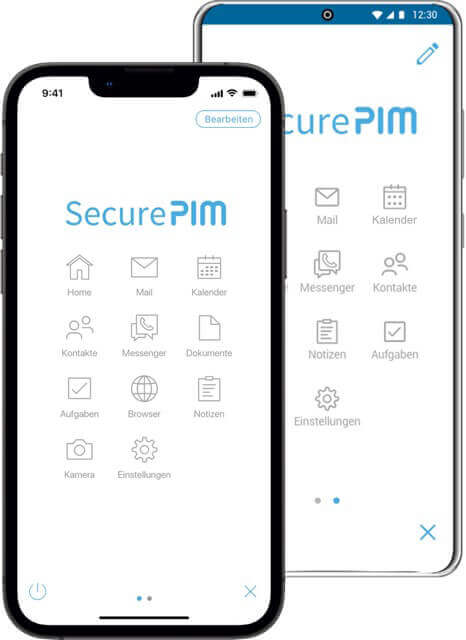
Now all of this needs to be implemented without mobile devices becoming a gateway for attackers and without employees or IT administrators having to go to great lengths to introduce them. In addition, internal data and the privacy of employees must be protected. A container solution for smartphones and tablets such as SecurePIM makes public administration flexible and securely mobile. The solution is already being used successfully in many ministries and authorities, such as the Weilheim Schongau district office.
Read more about this in our case study.