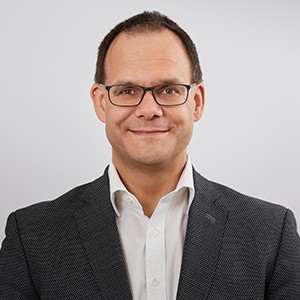


A few months ago, the Materna Group acquired the software specialist Virtual Solution. In this interview, CTO Dr. Hermann Granzer explains where the journey is heading and why mobile, secure communication is becoming increasingly important, especially for public administration.
What has changed since Virtual Solution became part of the Materna Group?
Hermann Granzer: By becoming part of Materna, we will achieve an even stronger presence in the public sector market and, together with our parent company, will be able to develop the digital working world even faster and more holistically. Here we benefit above all from Materna’s many years of experience in the public sector. The extensive network and well-developed infrastructure open up even more opportunities for us, especially as the first joint projects have already been launched.
The mutual exchange takes place on the fly, so to speak. We work together on joint implementation projects and develop a flowing transfer of knowledge, the use of shared tools and systems and, last but not least, getting to know each other personally. In doing so, we realize time and again: it fits! Both on a professional and personal level, the good feeling we had right from the start of being part of the Materna family is confirmed. This affiliation is now also visible to the outside world with our recently launched brand logo and our new brand name “Materna Virtual Solution”.
How is Materna Virtual Solution positioned?
Hermann Granzer: We have a clearly defined unique selling point and a significant value proposition: Our highly secure, ultra-mobile working environment on smart devices for the two operating system worlds iOS and Android is the only cross-platform solution of its kind to date. This makes us unique on the market. This makes us and our solutions extremely attractive for security-sensitive authorities, organizations and companies. Wherever New Work is on the agenda and high security standards are required for mobile working, we are the first choice.
This means maximum data security while maintaining digital sovereignty, both professionally and privately. Think, for example, of security-sensitive institutions such as the police, customs and military or the large area of BOS and KRITIS organizations. They all rely on ultra-mobile working and need secure communication and collaboration tools for this. The container solution from Materna Virtual Solution offers exactly that. That’s why hundreds of federal, state and local authorities as well as BOS and KRITIS companies are among our customers, who thus have ultra-mobile end devices at their disposal. GDPRcompliant via ultra-mobile devices.
But our SecurePIM solution can do even more. The security architecture of our solutions is highly secure – and yet easy to use. This increases the job satisfaction of our customers’ employees and makes them interesting and attractive employers. Young talent attaches great importance to an attractive working environment and is in short supply. Our vision is a digital, ultra-mobile workplace that takes all work processes into account, integrates specialist applications simply and securely and can be used easily and simply from anywhere. The sophisticated security mechanisms work quietly but effectively in the background.
What challenges do public authorities in particular face when it comes to secure mobile communication?
Hermann Granzer: Security is the overriding issue. A whole bundle of measures is necessary for mobile working. At the level of data transmission (data in transit), this is the End-to-end encryption. This ensures that messages can only be read by the sender and the recipient. In addition, locally stored data is encrypted (data at rest). Access to this data must be protected at least by PIN and password, or even better by biometric methods such as fingerprint or facial recognition. Federal authorities require mandatory Smartcard as an additional factor.
However, if access to mobile working is made difficult due to complex and inaccessible applications, employees often look for workarounds and resort to insecure alternatives such as WhatsApp, private email accounts and services such as Dropbox or WeTransfer. From a security perspective, this is of course a disaster.
And this is precisely where the challenge lies: combining security and ease of use. Our communication solution therefore securely combines all important office functions such as email, messenger, telephony, calendar and document processing as well as specific specialist applications in one integrated app. It is based on native apps and can be used without restrictions on both service smartphones (Company Owned Personally Enabled or COPE) as well as on employees’ private end devices (Bring Your Own Device or BYOD).
We are also currently developing an integrated internal solution for high-security access to sensitive data via smartcard and smartcard reader, eliminating the need for external hardware.
Ultimately, the challenge is threefold: maximum security, high flexibility and ease of use.
How widespread is mobile working in the administration? Will BYOD already being used there on a large scale?
Hermann Granzer: According to our State & Administration Future Panel, 25% of federal authorities and as many as 27% of state authorities are already using BYOD. The last two years of the pandemic have certainly been a strong driver here – but not the only one. Above all, it is the omnipresent shortage of skilled workers that is drastically increasing openness to modern forms of working and forcing companies to rethink. The latest study by McKinsey makes it clear: in the public sector, one in three employees will retire by 2030. Employers must therefore offer the next generation an attractive workplace with modern technologies and innovative solutions. For digital natives – we also like to call them ultra-mobile natives – mobile work often plays a more important role than salary and is a decisive factor when choosing a job. Nevertheless, this is not yet being implemented across the board in public administration. The main reason for this is security concerns. This is precisely where our approach comes in: data security and GDPR compliance are guaranteed by the container technology of our SecurePIM system solution. So there is no longer any reason to prevent widespread ultra-mobile working in the public sector.
Which mobile applications are already available? Where do they still encounter difficulties?
Hermann Granzer: The pandemic has led to a flood of ultra-mobile collaboration and communication solutions, which often have typical security drawbacks: serious security risks and legal uncertainty when it comes to data protection. Third-party applications often read contact data and create user profiles by collecting metadata; GDPR compliance is no longer guaranteed. There is a risk of data leakage. What’s more, many collaboration tools are not subject to German law. For public sector institutions, as for many others, this is simply unacceptable.
The security of data on company cell phones is usually managed centrally via a mobile device management(MDM) system. Among other things, this is where global guidelines and access rights are defined and data backup, data encryption and the roll-out of apps are controlled. However, this also gives IT administration potential access to private cell phone data. At the same time, MDM solutions are usually very complex and only flexible to a limited extent. Container technology, on the other hand, makes COPE and BYOD scenarios possible without sacrificing convenience or security. The strict separation of professional and private data in closed containers also enables GDPR-compliant working on the move. Thanks to modern encryption technologies, data is also protected during transmission.
However, MDM and container technology are not mutually exclusive antagonists. Both can be combined very effectively to create a powerful overall solution that covers an enormous range of functions and security aspects.
With the solutions from Materna Virtual Solution, authorities can work mobile at the classification levels “Classified – for official use only”(VS-NfD) and “NATO Restricted“. What does this mean and in which environment is this required?
Hermann Granzer: We are talking here about high and highest levels of secrecy with very special security requirements, such as a Two-factor authentication via smartcard with its own crypto processor and storage of certificates. Compliance is mandatory for many federal authorities, BOS and KRITIS organizations. Accordingly, the communication and collaboration tools used there must also meet these requirements.
Our SecurePIM Government SDS system solution is certified by the BSI officially for NATO RESTRICTED and VS-NfD on iOS approved and released for Android. It is therefore currently unique and allows smartphones and tablets to be used for encrypted and secure work. Employees of public authorities and other public institutions can access emails, calendar entries and contacts while on the move. They have a secure camera at their disposal that can capture images in the secure app. This makes it possible to edit documents, integrate special specialist procedures, access document filing systems and intranet pages as well as make encrypted voice calls via a secure connection while on the move.
In short: a really easy-to-use complete package for highly secure communication and collaboration.
Would you also describe yourself as an ultra-mobile native?
Hermann Granzer: I’m not quite in the age group of digital natives, but I’m an enthusiastic ultra-mobile user myself. My cell phone lies next to me at night, switches on the light before it wakes me up, wakes up my smart home, and I read my newspaper on my cell phone or tablet while having a coffee in an environmentally friendly way. My journey to the office on my bike is tracked on my cell phone and, depending on my mood, I can listen to true wireless music or podcasts on the way. The first video calls and emails are also sent via my smartphone before I “switch” to my laptop. I even take handwritten notes in meetings digitally on an “e-Ink notebook”. I’ve only been reading books digitally since Kindle Generation 1 – since yesterday on my latest model. [/vc_column_text]
About Dr. Hermann Granzer
Hermann Granzer is responsible for managing the development of Materna Virtual Solution’s products and IT. He has more than 20 years of practical experience in various industries (automotive, healthcare, telecommunications, multimedia, supply chain) as well as in different technologies (mobile, JavaEE, .NET etc.).